Dear Rainwater
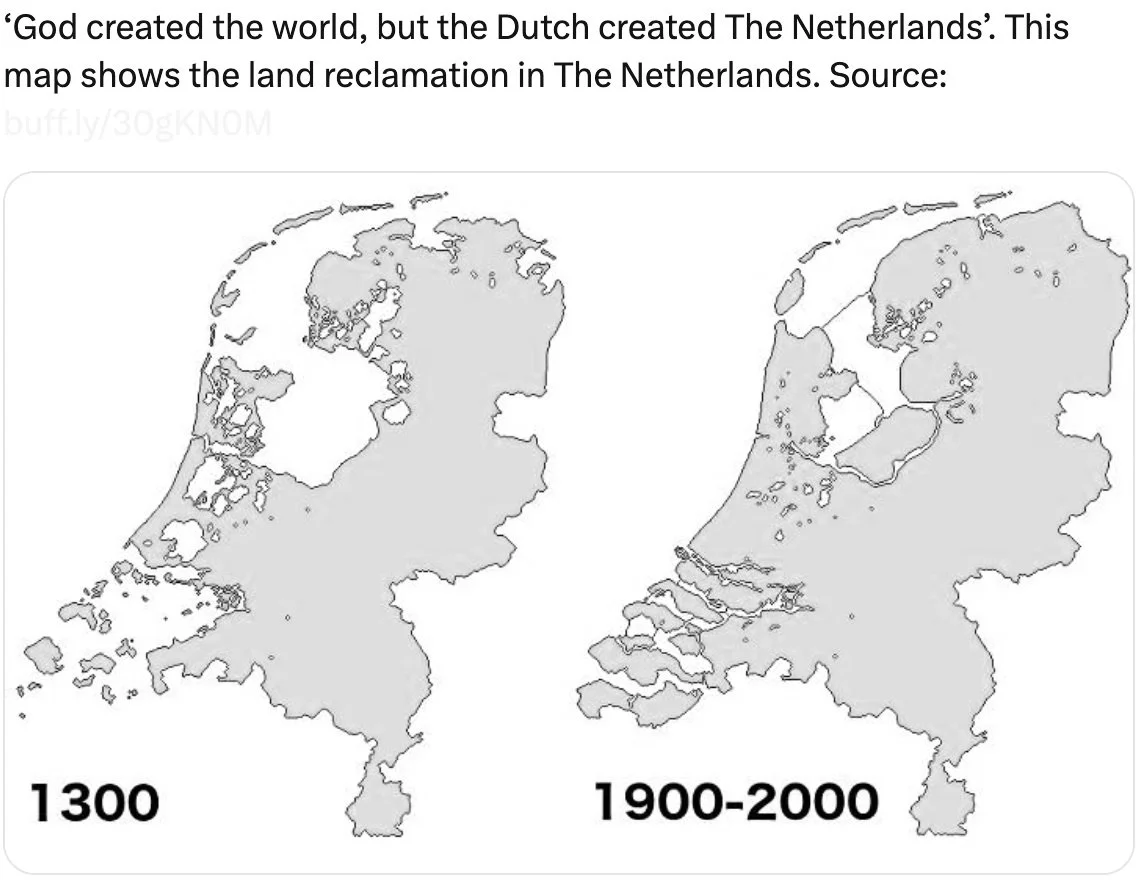
source: twitter
Last week was a chaotic week at the office due to the new ‘rainwater regulations’ and I remembered this image my brother sent me a few years ago. It shows a comparison of land reclamation between the 13th and 20th centuries in the Netherlands. While there are some comments about the fault information on these maps, I want to focus more on the case of Belgium and the dewatering reality in this type of countries.
I don't think you would believe it if I told you that there is a water shortage in Belgium. But this is true. In the list of countries with water shortages, Belgium ranks 23rd between Andorra and Morocco. If it has rained a lot, that doesn't mean there is enough water. You need to be able to hold the rainwater and create enough time for it to infiltrate the groundwater.
In a small country like Belgium, dry land is needed more than wet. In order to have more dry land, they reshaped their landscape and oriented water through canals. These new dry lands have become built-up areas. And these built-up areas turned this small country into a densely populated one. As a result, the soil’s existing ability to retain and infiltrate water is lost.
Additionally, oriented water through canals drains into rivers or seas, preventing water retention and infiltration. Rainwater needs sufficient time and space to infiltrate groundwater. This resulted in a significant drop in groundwater which is the main source of water for plants and our drinking water.
If you pave everywhere or make canals to orient rainwater, there is not enough time and space left for that water to infiltrate through the soil. When it rains really hard, the water has to find its way somehow. That's how we usually get floods in our cities. Because there is not enough time and space for water to infiltrate.
In new buildings or renovations in Belgium, collecting as much rainwater as possible from roofs and reusing it for households or maintenance was already very important. In certain cases, you also had to place infiltration crates to provide slow infiltration through the back gardens. As of this week, this has changed dramatically and become more stricter. (I completely agree with the decision and like it very much.) But explaining this to customers is quite difficult. For most, it just means additional cost. As a result, last week some people had to carry the burden and submit the projects before the new rainwater regulation. And I was one of those people...
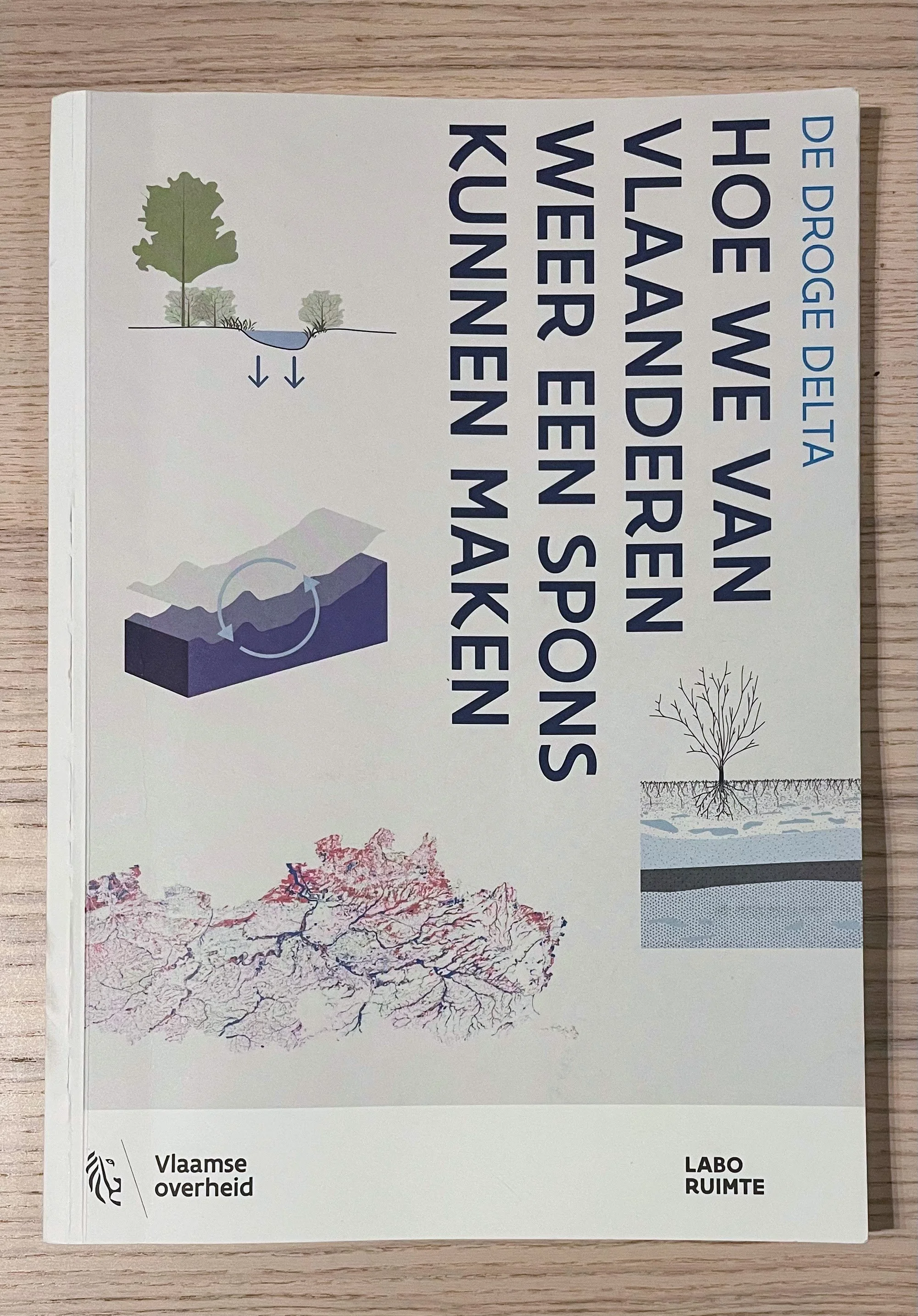
De Droge Delta. Hoe we van Vlaanderen weer een spons kunnen maken - LABO RUIMTE, Vlaamse Overheid
One of the best publications I have read lately. My text is largely inspired by this publication because the introduction of the new rainwater regulation coincided with my reading of this publication. And I took the statistic figure I used in my text from this publication. It also contains nice graps and photos. Still, it would have been nice to have more explanations below them.