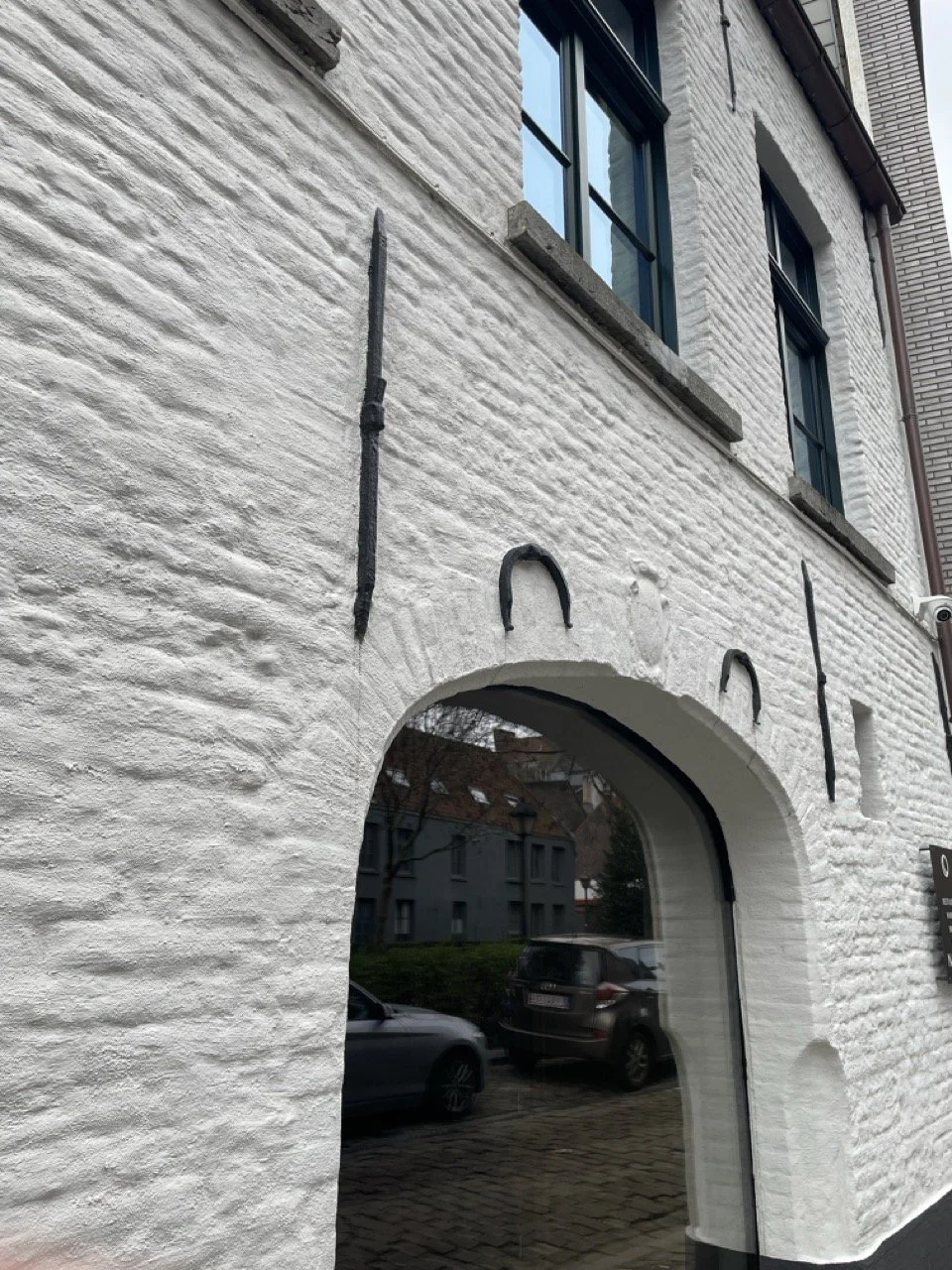
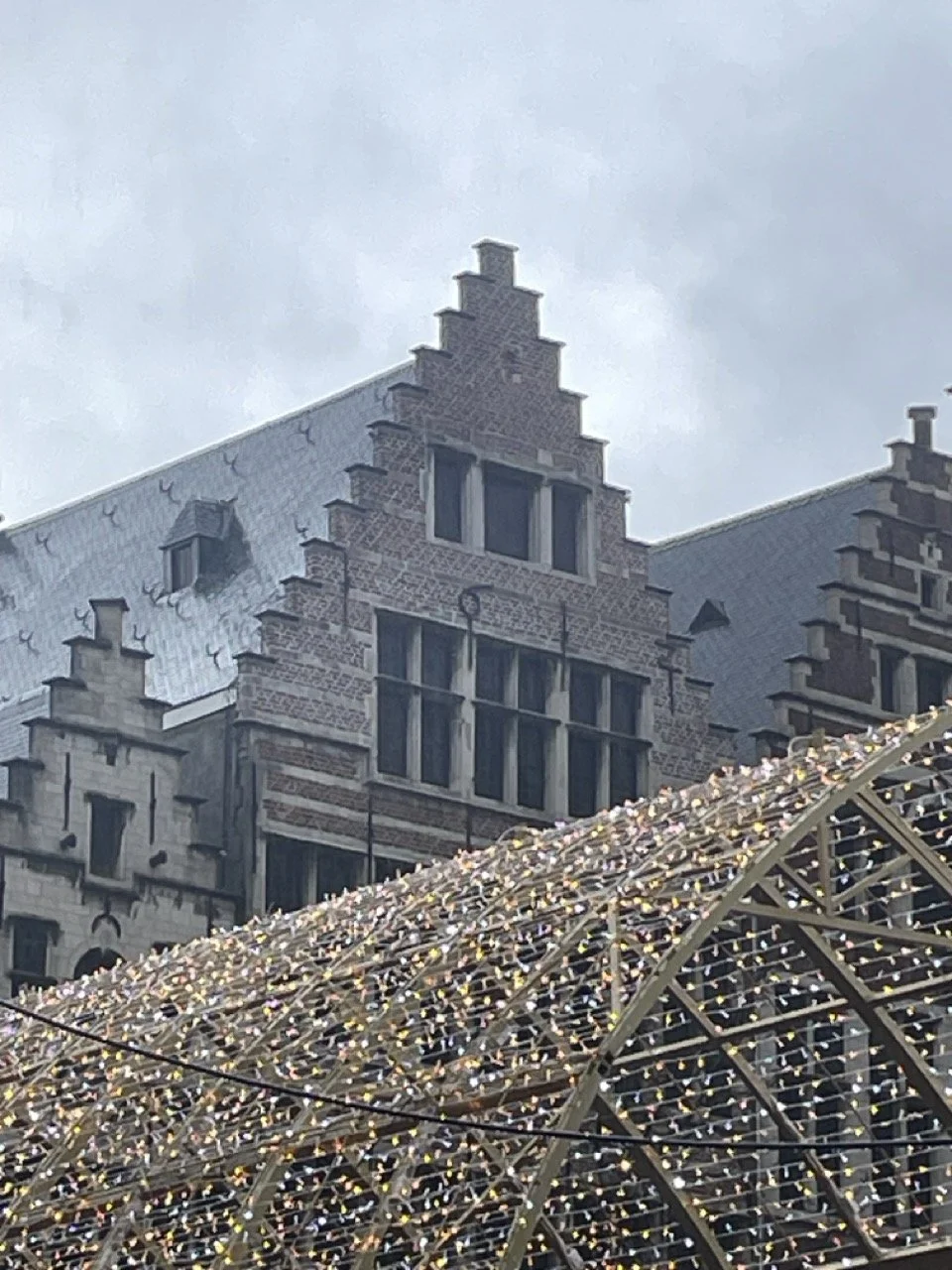
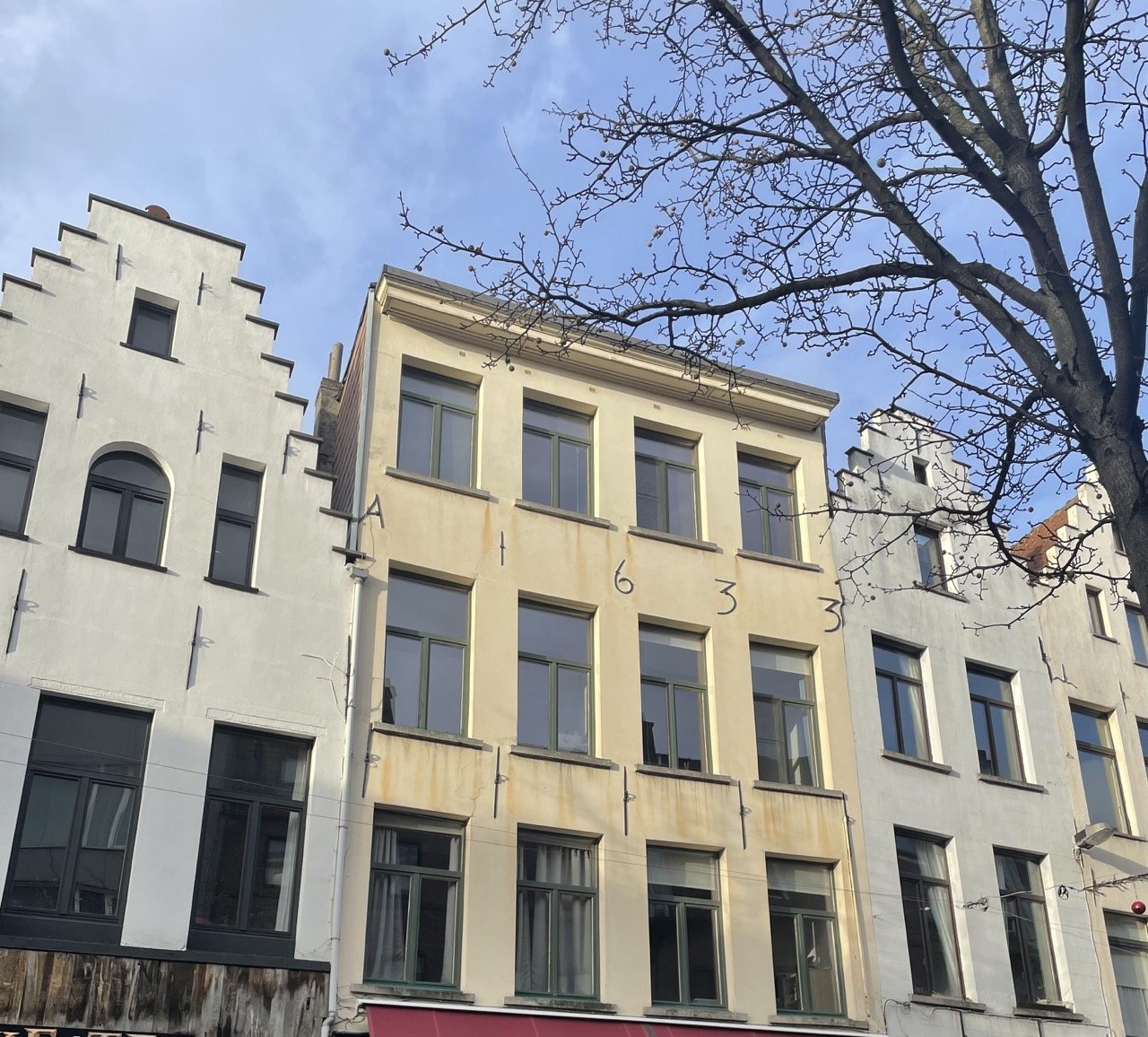
Iron Tie Rods
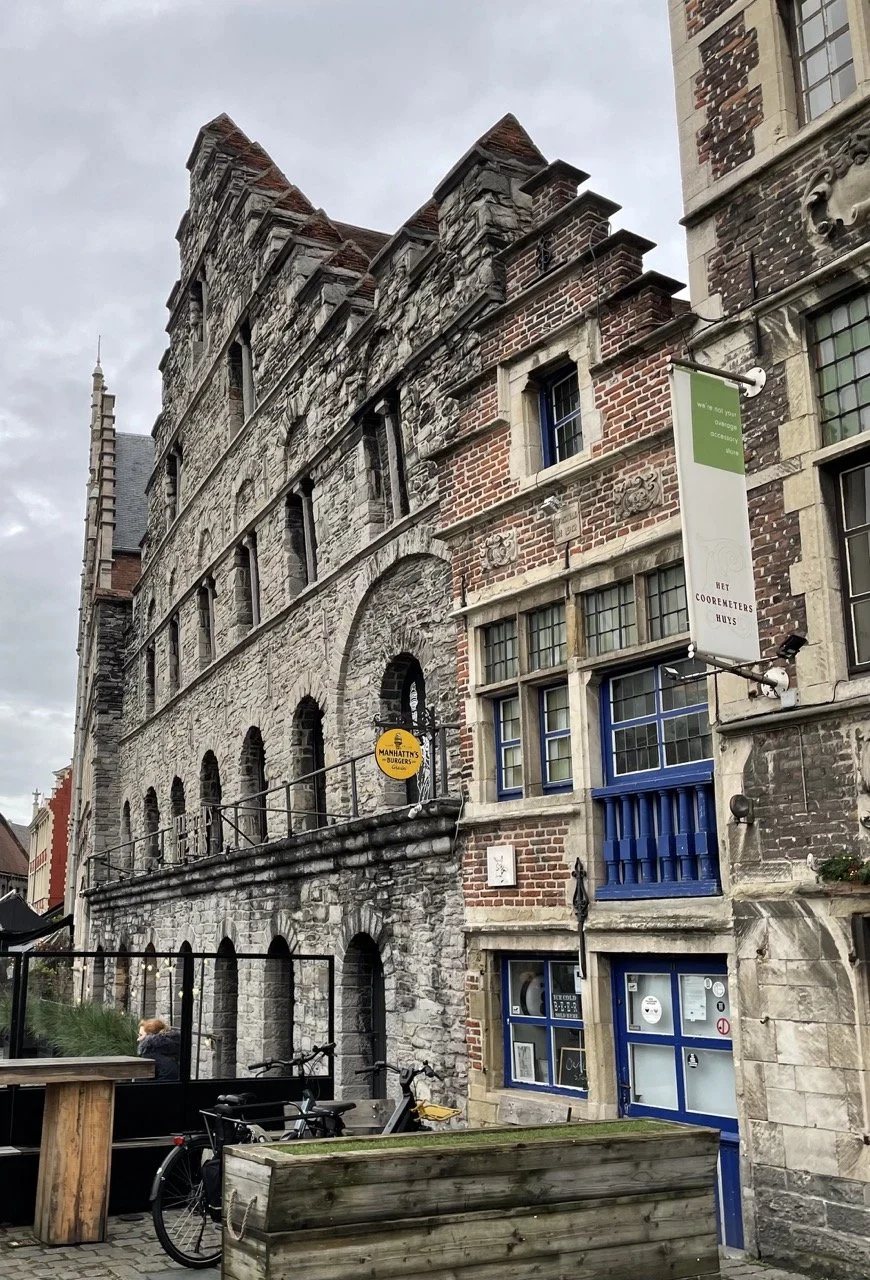
Ghent - leaning buildings
Moving to another country or even another city make it challenging to define the particular space that feels like home, considering that home often refers to a personal and spatial haven for everyone. This situation rather becomes an in-betweenness where you are not sure what home really is. Going back to Ankara makes my room there feel like a museum of memories, each corner a collection of the past. And, returning to my apartment in Antwerp, though familiar, still doesn’t give me that sense of home. Actually I feel a bit like a turtle, carrying my home on my back, wandering through the realms of uncertainty.
I’ve been living in Belgium for 5 years and I have changed 2 cities and lived in 5 different apartments. Along this journey, I’ve met many people—some evolving into friendships, and others remaining acquaintances. Now I will be moving to another city and yet another apartment. But this time it is not really moving to a new city because I’m going back to the city where it all began, Ghent.
Now, in pondering the concept of home and relocating once again, I want to convey a short sentiment about discovering peace and reassurance in the familiar sights, before delving into the topic of iron tie rods.
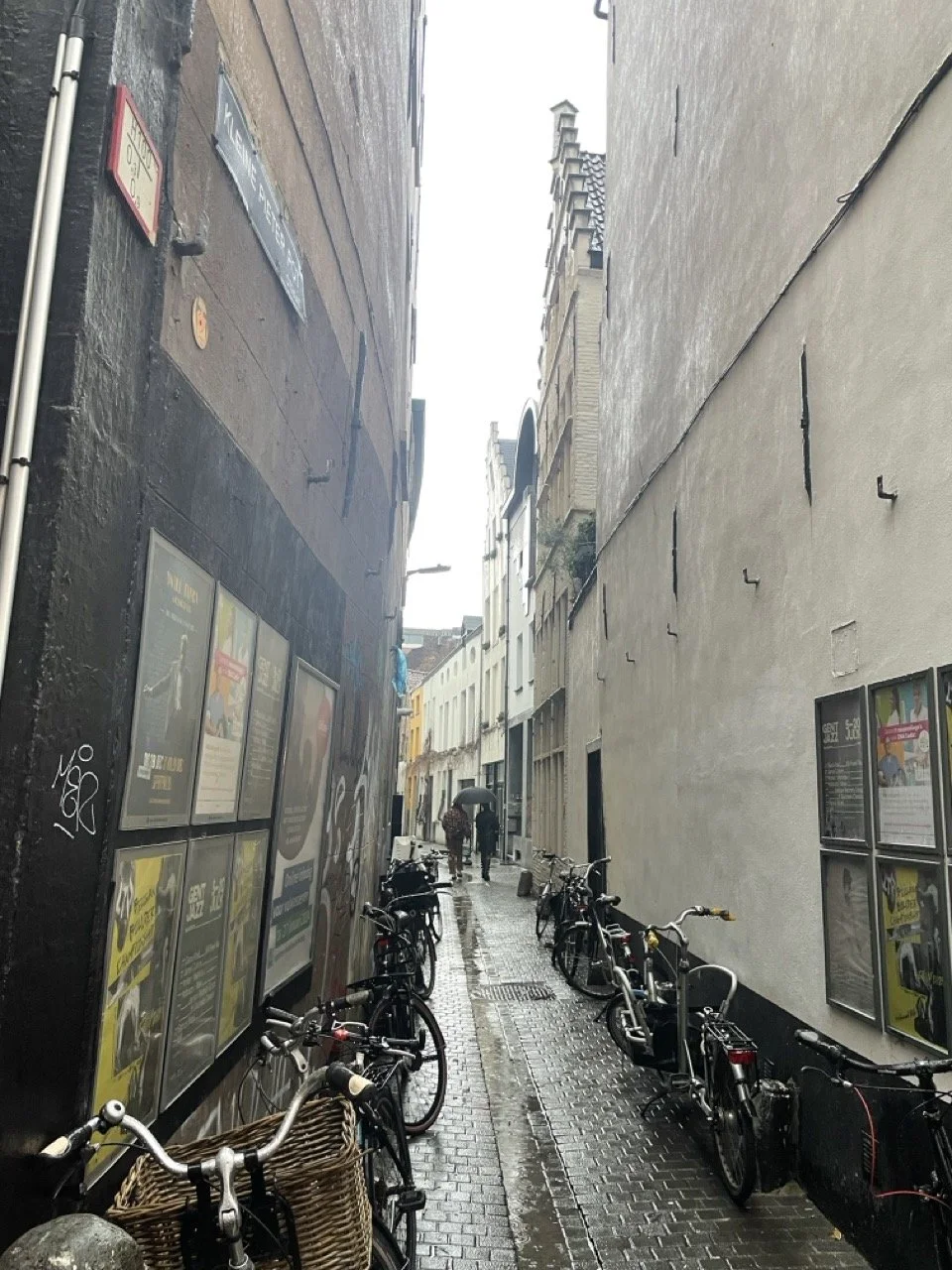
During my time in both Ghent and Antwerp, I noticed something interesting in both cities — buildings leaning and bulging outwards! Some old buildings in both places have this interesting feature where they seem to bulge outwards. Walking on narrow streets surrounded by these bulging and leaning buildings takes me back to those times when we visited my father’s childhood neighborhood in Mamak, Ankara where my grandparents and aunts lived when I was a child. It was a single storey house in a neighborhood with many other single storey houses. The house had a huge garden with huge trees (or everything seemed huge to me back then). The streets were narrow and winding, weaving through structures with irregular walls that defined and followed these paths.
Antwerp - buildings leaning and bulging outwards
So, whenever I stroll through the streets adorned with buildings leaning and bulging outwards, such as the ones in Ghent and Antwerp, they remind me of those streets from my childhood. And I find peace in the familiar presence of these structures. I envision these leaning structures of Antwerp and Ghent as silent observers, their bulging parts akin to bellies, keenly watching over the surroundings and embracing the street. Similar to how a belly may struggle to fit comfortably in a shirt, these buildings, too, seem to require a set of proper buttons to complete their distinctive appearance. And these buttons are iron tie rods or so called wall washers.
In many cities in Europe, you'll often encounter iron tie rods on old masonry buildings. While you might associate them with Ezio using them to climb buildings in Assassin's Creed, the reality is quite different.
For structural stability, old structures' masonry walls are fastened with iron tie rods. Because, despite the load-bearing nature of the facade in these structures, it lacks a robust structural connection with the rest of the building, which can lead to failure of these walls. A peculiar challenge often found in these old buildings lies in the arrangement of floor and roof joists that run parallel to the front and rear facades, interconnecting with party walls shared between buildings. This spatial arrangement creates a structural vulnerability due to inadequate lateral restraint to limit the sideways movement. In today's building methods, walls are kept steady by using the floors and roofs to hold onto them which provides lateral restraint. However, the front and back walls of these buildings are only connected at the roof and edges, leaving the facade walls without lateral restraint. Over time, these masonry walls can push out and bulge outwards, posing a risk of collapse. To mitigate this risk and stabilize the walls, iron tie rods are used. They can be found in a range of sizes and forms. They also become a part of the facade's ornamentation.
When I deal with a project involving iron tie rods, initial impressions often provide more clues than concrete facts. It is difficult for me to determine if the iron tie rods were added during the initial construction or if they were placed later. And the presence of iron tie rods may suggest that the building has faced structural challenges. Based on my observations of buildings in Ghent and Antwerp, I often see a correlation between the position of iron tie rods and the internal floor heights. However, making definitive assumptions about internal floor heights relying solely on external clues of iron tie rods is not always reliable.
Therefore, it's important to bear in mind that the absence of tie rods doesn't necessarily imply the absence of structural concerns, and their presence doesn't automatically indicate poor construction. These iron tie rods are like buttons on the shirt of structural stability.