Are the Parks an ‘Error’?
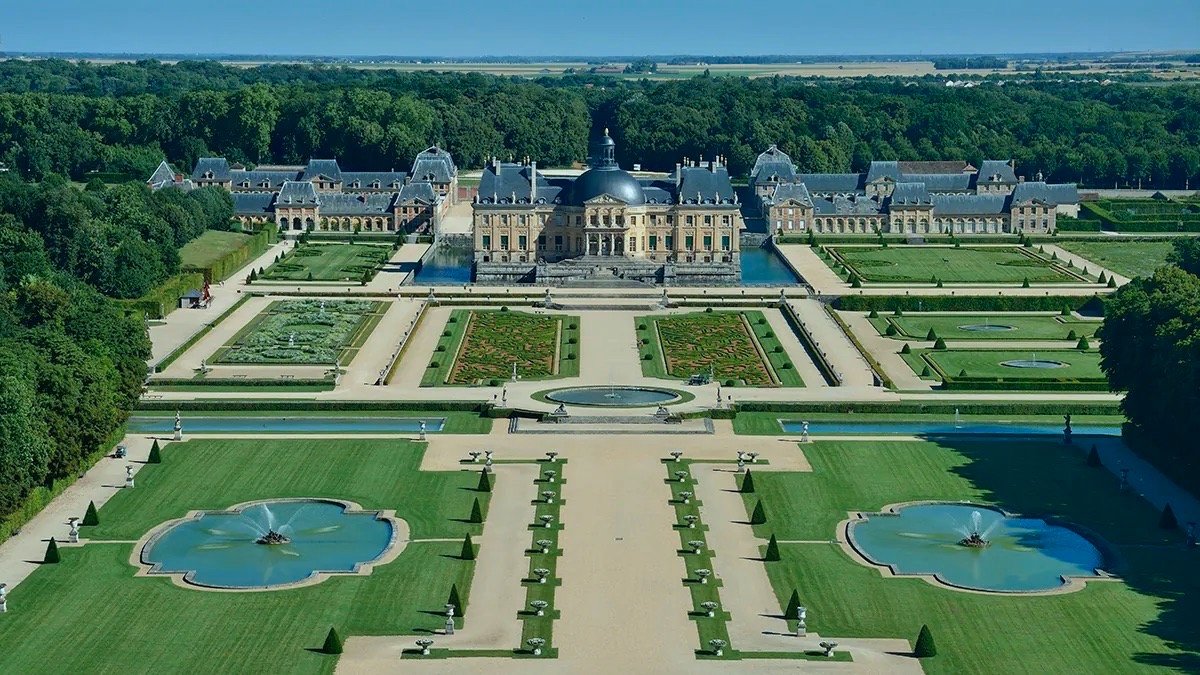
Vaux-le-Vicomte,
image adapted from Gaia Ferro Forgiato, ‘The French Formal Garden,’ gaiaferroforgiato.it/en/the-french-formal-garden/.
It is as if some parks were never meant for spending long, idle hours among the trees, but for standing before them in a kind of silent salute.
I remember reading this idea in a book by Uğur Tanyeli, who described parks designed not to be lived in but to be revered. In these places, the grass does not wait for footsteps (as someone commented in one of my previous posts); every path is precisely defined, every trunk aligned as if at attention, a landscape tamed by the order. At some point, I hesitate to call them nature at all. Such parks transform nature into monuments, spaces not to be entered but rather to be admired from a distance, like relics behind glass.
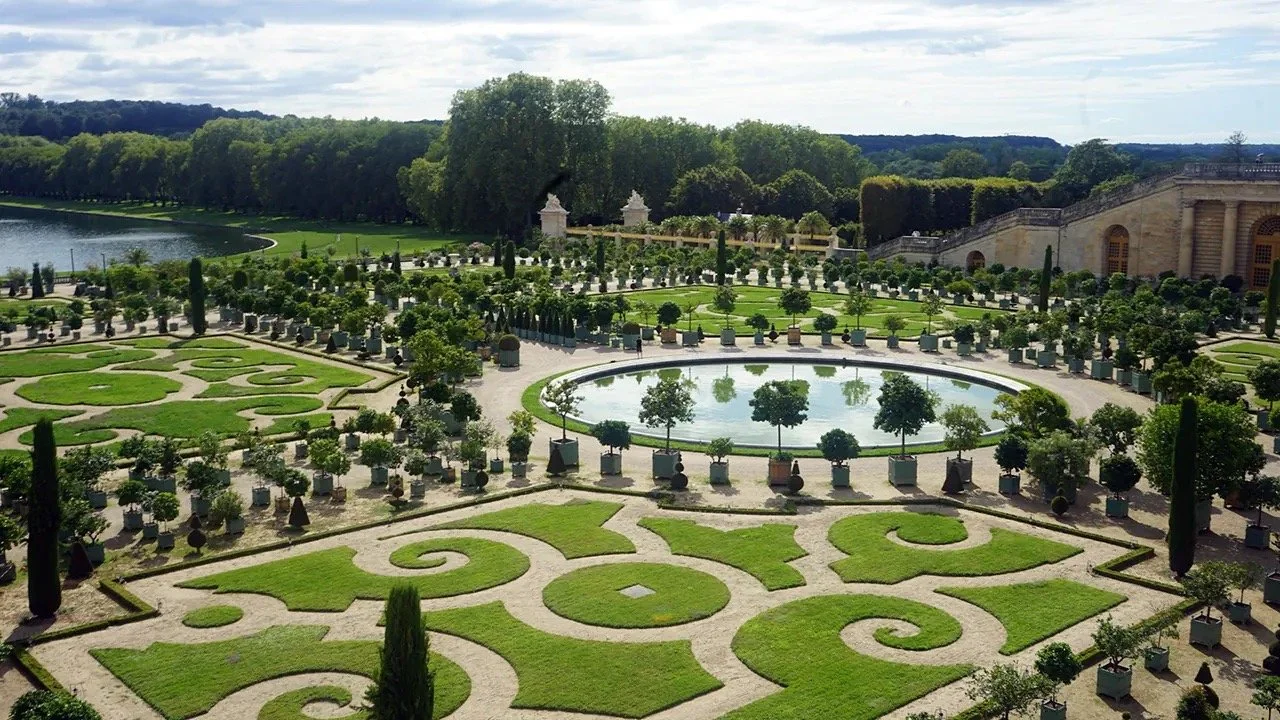
The Gardens of Versailles,
image adapted from Gaia Ferro Forgiato, ‘The French Formal Garden,’ gaiaferroforgiato.it/en/the-french-formal-garden/.
You can feel this most strongly when wandering parks shaped in the tradition of the French formal garden, like those around the palaces of Versailles. The French formal Garden, ‘jardin à la française’, emerged as an expression of human control over wilderness: symmetry and axis are commanding, trees and hedges arranged in grids, water confined within rectilinear pools.
A friend recently showed me an aerial photograph of the gardens around a historic castle. Seen from above (we would call this bird's-eye view at the school) the composition revealed the order, with almost mathematical coldness. Hedges placed in perfect alignment, trees waiting in ranks, a water feature disciplined into a clean rectangle, and walking paths enclosing it all in a perfect symmetry. As you now know, this was another garden in the French Formal Garden style.
“Beautiful, isn’t it?” he said. I found myself nodding in polite agreement, unsure whether even my best Dutch could express my disagreement. While privately thinking: yes, it is beautiful, but not the beauty of nature. It is a beauty already finished, complete, a beauty that offers nothing more, one you can neither participate in nor converse with. There is no chance to imagine what might be beyond the next turn.
Perhaps the true wildness of nature is an error to be corrected, tamed and shaped by a human being until every element obeys.
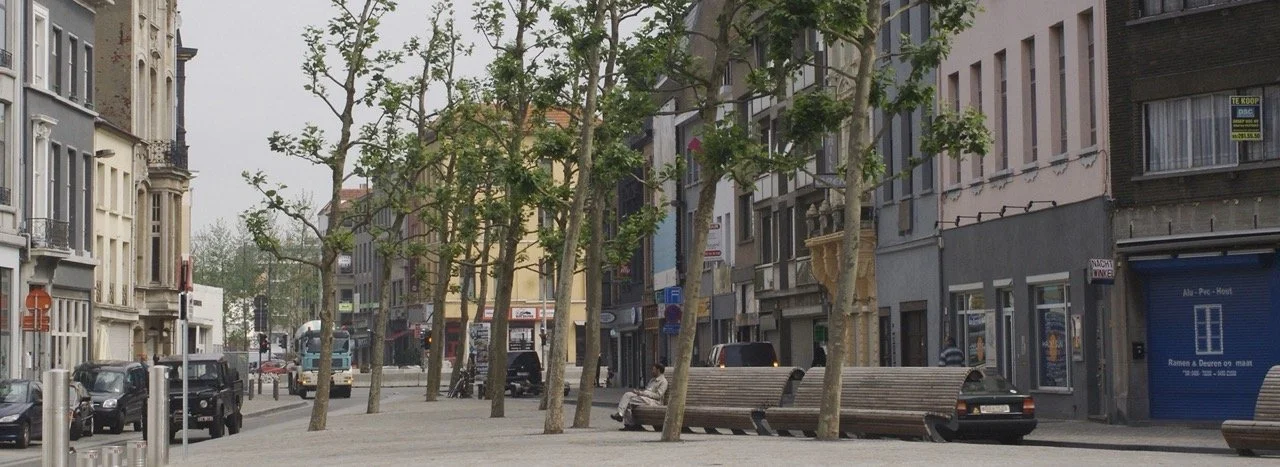
Falconplein,
image adapted from www.vdberk.be.
Yet, not every landscape pursues such control. A few blocks north of Antwerp’s historic center, on Falconplein, a square where the trees refuse to stand upright. Instead, they lean at angles, each trunk bending. One might assume a storm passed through, but the reality is different. I learned the truth from another architect, at the time we were passing there for a site visit. The trees were planted leaning to emphasize the prevailing winds from the Scheldt (famous river of Antwerp).
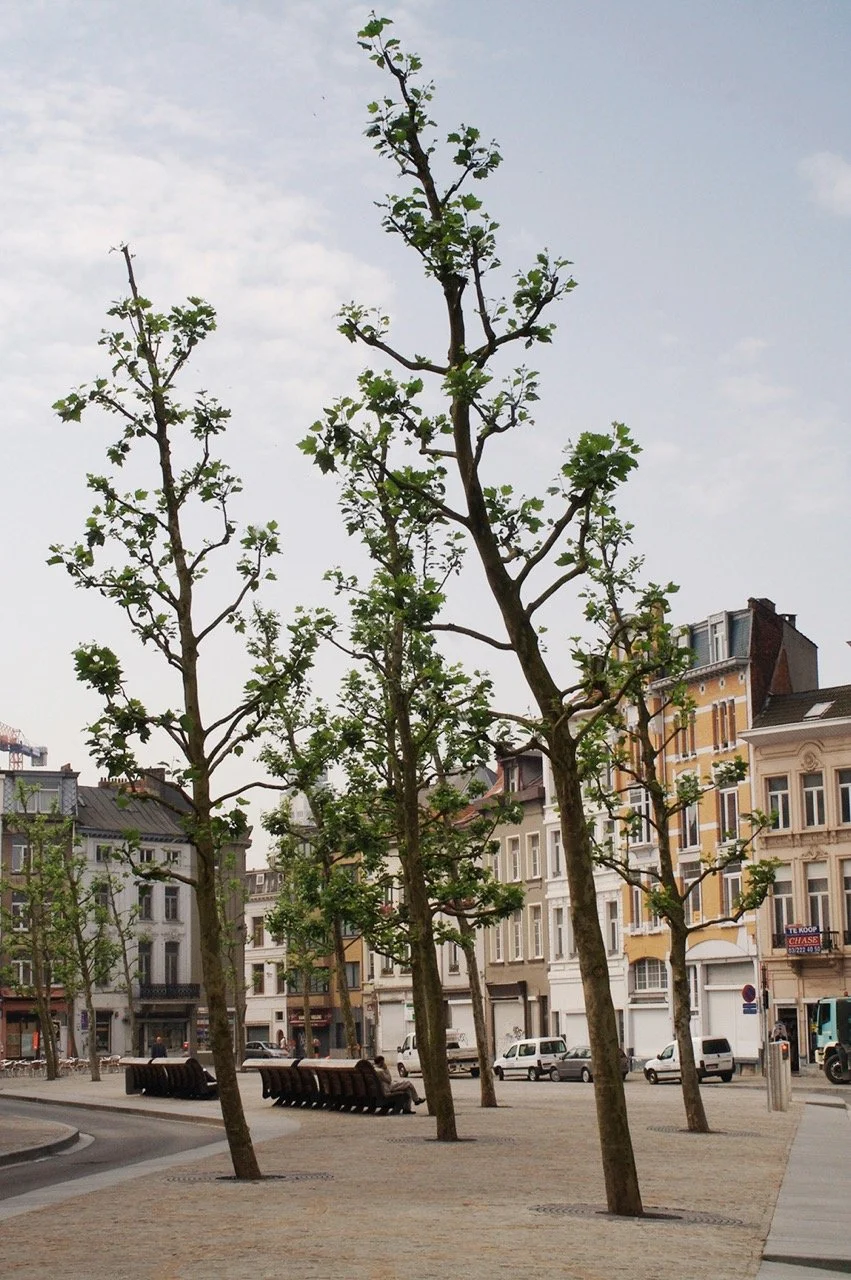
Falconplein,
image adapted from www.vdberk.be.
What I find compelling here is not just the nod to the river’s presence, but the choice to embrace irregularity. Here, the so-called ‘error’ becomes the design. Of course, there is still a human imprint, the initial tilt of the trunks, but compared to the gardens of Versailles, here the interference registers as a whisper, not a command.
Since you now also know what the French formal garden style is, next time you visit a park like this you can experience it for yourself and share your thoughts with me.
And, apart from everything else, how can one really feel at ease after watching the Harry Potter scenes set in a hedge labyrinth? That dark atmosphere, that quiet unease… Perhaps this is, in the end, the very reason for my own discomfort in these parks. Which is why, after leaving such gardens, I find myself breathing more easily in places like Falconplein, where the trees lean and not everything stands in perfect line.